
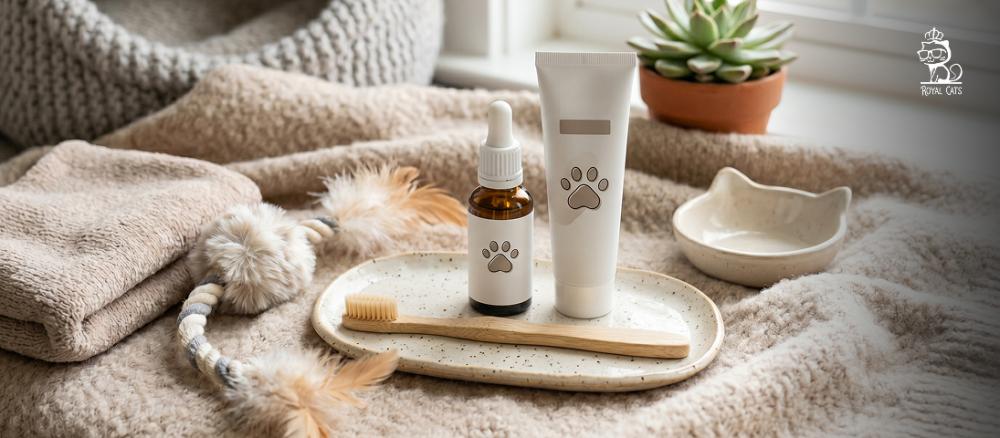

Are you looking for the secret to your pet's health and happiness? True care starts from within, specifically from the mouth. In this guide, we'll learn how to clean your cat's teeth with easy at-home steps and reveal effective methods for removing tartar to protect them from cavities and diseases.
Should cats' teeth be cleaned?
Yes, cats' teeth should be cleaned regularly. Just like humans, food debris and bacteria accumulate on cats' teeth, forming plaque, which over time hardens into tartar, causing severe gum inflammation, tooth loss, and bad breath.
It's not just about oral hygiene; neglecting dental care can lead to bacteria entering the bloodstream, threatening your pet's vital organs like the heart and kidneys. Therefore, consistent home care is the first line of defense for protecting your cat and ensuring a healthy life.
Discover now the best types of nutritional supplements for cats
Symptoms of tooth decay and gum problems in cats
Cats are very adept at hiding their pain, and symptoms of tooth decay and gum problems in cats appear through behavioral changes and clear signs in the mouth that should be noticed immediately to protect them from complications. Among the most prominent of these signs are...
- Your pet's breath becomes unpleasant and irritating due to the heavy buildup of bacteria and tartar.
- The cat refuses dry food, chews on one side, or moves away from the bowl despite being hungry.
- She may notice excessive and continuous salivation, possibly accompanied by light streaks of blood.
- The gums turn from a healthy pink color to dark red and bleed when touched.
- The cat rubs its mouth against the furniture or boldly uses its claws to relieve its toothache.
How do I clean my cat's teeth at home?
Cleaning your pet's teeth at home requires patience and a gradual approach to ensure the cat's comfort and lack of fear. You can easily achieve this by following these steps.
- Taste the cat food in chicken or fish flavor and reward it to associate the experience with something positive.
- Gently touch your gums and teeth with your finger first to get them used to the idea of touching their mouth.
- Insert the designated brush and move it gently in circular motions on the outer teeth with extreme care.
- Offer your cat a tasty treat immediately afterward to ensure its obedient response in the future.
Discover the most forbidden foods for cats
What is the best thing for cleaning cats' teeth?
The ideal choice depends on combining several pet-specific products to ensure a healthy, bacteria-free mouth. These products include the following options.
- Toothpaste specifically formulated for cats comes in appealing flavors like chicken or meat; human toothpaste is strictly prohibited.
- The silicone finger toothbrush is soft and gives you complete and gentle control inside the cat's mouth.
- Dental cleaning sprays and mouthwashes that can be added to drinking water to disinfect the mouth and reduce plaque effortlessly.
- Crunchy toys and treats are specially designed to help scrape away food residue and delay tartar buildup while chewing.
The most useful products from Royal Cats
Royal Cats offers a distinctive range of products that support the health of cats and combine nutrition with a daily treat:
- Winby Liquid Rewards
- A reward for kittens
- Treat Liquid for Cats
- Probiotics for cats
- Salmon oil for cats
- Cat food reward
Removing tartar from cats' teeth and when to visit the vet
Soft plaque buildup accumulates over time, turning into hardened limescale deposits that household brushes cannot remove. This is when the signs appear that necessitate an immediate visit to the veterinarian for your cat.
- Accumulation of thick, very hard yellow or brown deposits on the tooth surfaces and near the gum line
- A very bad and unpleasant odor of breath that does not go away at all, even after using household disinfectants and sprays.
- Receding gum line, prominent tooth roots, or loose teeth that move out of place
- The cat's complete refusal to eat and noticeable weight loss are due to severe pain when chewing.
- The cat needs a professional ultrasonic cleaning and tartar removal session under safe sedation at the clinic.
Golden tips to protect your pet's teeth for life
Maintaining your cat's oral health ensures an active life free from sudden pains. To achieve this in the best possible way, you can follow these guidelines and steps.
- Brushing your teeth at least two to three times a week is essential to prevent plaque buildup.
- Regularly offering dry food helps to mechanically scrape and clean the teeth while chewing.
- Regularly check your cat's mouth and gums at home to detect any redness or problems in their early stages.
- Providing medically approved toys and rewards to help clean the mouth and stimulate blood circulation in the gums.
- Visit your veterinarian once a year for a comprehensive check-up and professional tartar removal to protect your pet for life.
ﻻ
Because your pet's health and happiness begin with their smile, we at Royal Cats store provide you with Everything you need for superior oral hygiene and health for your cat. Browse our premium selection of specialized toothpastes, gentle silicone brushes, freshening sprays, and tartar-scraping treats, and make your pet's at-home grooming routine easier and more enjoyable.
Frequently asked questions about cat dental care
How many times a week should cats' teeth be cleaned?
It is recommended to clean cats' teeth at least three times a week, and ideally make it a daily habit to completely prevent plaque buildup.
Is human toothpaste harmful to cats because of the fluoride it contains, which is toxic to them?
Yes, it is very harmful to them, as human toothpaste contains fluoride and xylitol, which are toxic substances that cause severe poisoning and kidney failure in cats.
How can I tell if my cat has a toothache at home?
You will notice her refusing dry food, drooling excessively, rubbing her face against furniture, and tilting her head strangely while chewing.
Does dry food completely replace brushing cats' teeth?
It doesn't completely replace dry food, as it only helps to scrape away small parts, but it doesn't reach the gum line and tight corners like a toothbrush.
When should I start training my kitten to have its teeth cleaned?
The ideal age to start is two to three months so that the kitten gets used to the routine and accepts it easily before reaching adulthood.